When you invest in a video surveillance system for your business in Congo-Brazzaville or the DRC, the cameras are only half the story. The real backbone of your security setup is the device that records and stores your footage: the NVR or the DVR. Choosing the wrong one can mean poor image quality, limited storage, or a system that is difficult to expand as your company grows.
At CEC TELECOM, we install and maintain video surveillance solutions for banks, shops, warehouses, hotels, and offices across Brazzaville, Pointe-Noire, and Kinshasa. In this guide, we explain the difference between NVR and DVR, and help you decide which video storage technology fits your needs.
What is a DVR?
A DVR (Digital Video Recorder) is the older, more established technology. It works with analogue cameras. Each camera connects to the DVR using a coaxial cable (or sometimes a hybrid cable that also carries power), and the DVR converts the analogue signal into a digital format before recording it to a hard drive.
How a DVR works
- Analogue cameras capture the video.
- A coaxial cable carries the signal back to the DVR.
- The DVR digitises, compresses, and stores the footage on an internal hard drive.
- You view live or recorded images on a monitor or remotely via a mobile app.
Advantages of DVR
- Lower cost: Analogue cameras and coaxial cabling are generally cheaper, which matters when you are equipping a large site on a tight budget.
- Simple installation: Coaxial cable is robust and can run over longer distances without much signal loss, which is useful in older buildings where re-cabling is complicated.
- Easy to maintain: The technology is well known, and spare parts are widely available in the region.
Limitations of DVR
- Lower resolution: Traditional analogue systems are usually limited to 1080p or lower, although HD-CVI, HD-TVI, and AHD technologies now push analogue to 4K.
- Scalability: Adding cameras means running new cables back to the recorder, which can be costly in large or spread-out premises.
- Analogue only: You cannot mix IP cameras into a standard DVR without a hybrid model.
What is an NVR?
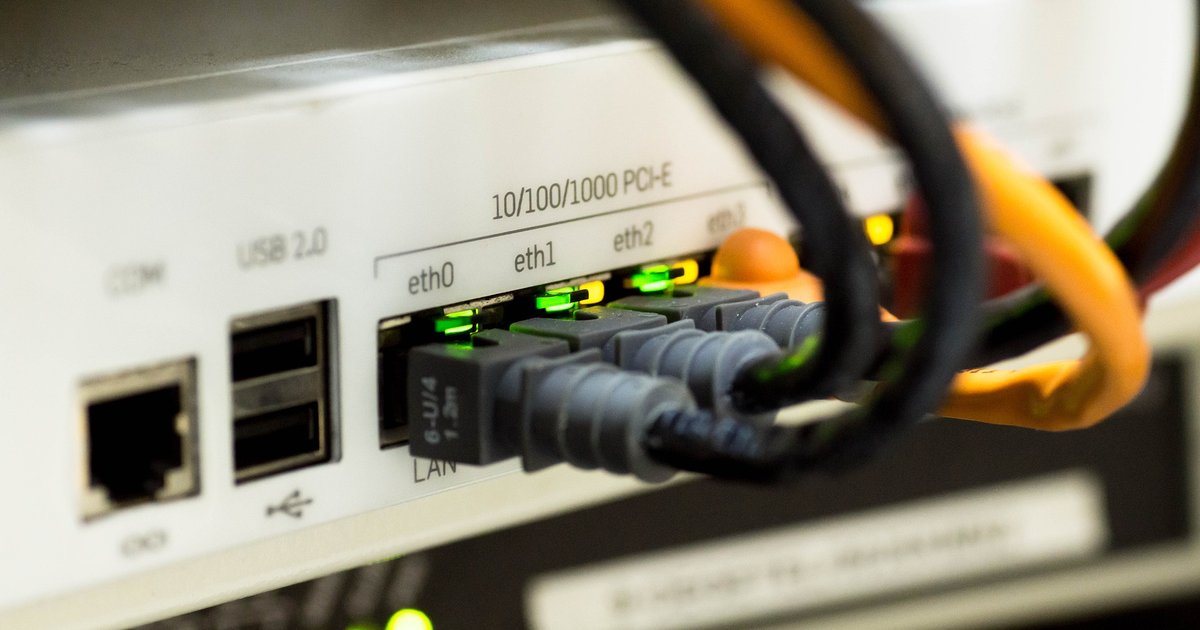
An NVR (Network Video Recorder) is the modern standard. It works with IP cameras, which send digital video over an Ethernet network (or Wi-Fi) rather than through coaxial cable. The NVR receives the streams and records them to its hard drive, either on-site or on a remote server.
How an NVR works
- IP cameras capture and encode video digitally.
- The video travels over a network cable, often through a PoE (Power over Ethernet) switch that also powers the camera.
- The NVR records the streams to a hard drive.
- Users access footage from a computer, smartphone, or video wall, from anywhere with an internet connection.
Advantages of NVR
- Higher resolution: IP cameras deliver 4K, 8MP, and beyond, giving you sharp images for identifying faces, plates, or incidents.
- Better scalability: Adding a camera is as simple as plugging it into the network, which is ideal for multi-site operations.
- Advanced features: Motion detection, line crossing, facial recognition, and analytics are built into many IP cameras and NVRs.
- Flexible storage: You can record locally, on a NAS, or in the cloud, and manage retention policies centrally.
Limitations of NVR
- Higher upfront cost: IP cameras and PoE switches cost more than analogue equivalents.
- Network dependency: A reliable network and proper configuration are essential. Poor bandwidth or a badly designed LAN will affect performance.
- Technical expertise: Setup and troubleshooting require trained technicians, which is exactly where a partner like CEC TELECOM adds value.
NVR vs DVR: a side-by-side comparison
| Criteria | DVR | NVR |
|---|---|---|
| Camera type | Analogue / HD analogue | IP |
| Cabling | Coaxial | Ethernet (Cat5e/Cat6) |
| Maximum resolution | Up to 4K with HD analogue | Up to 4K and beyond |
| Scalability | Limited | Excellent |
| Remote access | Yes, via app | Yes, via app and web |
| Analytics | Basic | Advanced |
| Cost | Lower | Higher |
| Best for | Small sites, retrofits | New builds, multi-site |
Which one should you choose in Congo-Brazzaville or the DRC?
The right answer depends on your site, your budget, and your growth plans. Here are a few practical scenarios we see regularly at CEC TELECOM.
Choose a DVR if:
- You are upgrading an existing analogue system and want to keep your current cabling.
- You manage a small shop, residence, or single-building office with fewer than 16 cameras.
- Your budget is tight and 1080p or 4MP image quality is sufficient.
- You need a straightforward, low-maintenance setup.
Choose an NVR if:
- You are building a new site and can install network cabling from the start.
- You need high-resolution images for identification, such as in banks, airports, or industrial sites.
- You operate multiple branches and want to manage them from a central location.
- You plan to add cameras, analytics, or cloud storage over time.
A note on infrastructure
In many parts of Congo-Brazzaville and the DRC, power stability and internet connectivity are real constraints. A well-designed NVR system should include a UPS, surge protection, and a properly configured local network so that recording continues even when the internet goes down. CEC TELECOM designs every installation with these realities in mind, using equipment adapted to local conditions.
Hybrid solutions: the best of both worlds
You do not always have to choose one or the other. Hybrid recorders accept both analogue and IP cameras, which is useful when you want to keep existing analogue cameras while progressively migrating to IP. This approach protects your initial investment and lets you upgrade at your own pace.
At CEC TELECOM, we often recommend a phased migration: keep the DVR for older zones, add an NVR for critical areas such as entrances, cash desks, and warehouses, and unify everything through a single management platform.
Storage capacity: the question nobody asks
Whichever recorder you choose, storage is what determines how far back you can look. As a rule of thumb:
- 1080p camera at 15 fps: roughly 20–30 GB per day.
- 4MP camera: roughly 40–60 GB per day.
- 4K camera: roughly 80–120 GB per day.
Multiply by the number of cameras and the number of days you need to retain footage. A 16-camera 4K system with 30 days of retention can require 30 TB or more. This is why we always size the hard drives and RAID configuration before installation, not after.
The bottom line
DVRs remain a cost-effective choice for small sites and analogue retrofits. NVRs are the future: higher resolution, better scalability, and smarter analytics. For most businesses in Congo-Brazzaville and the DRC that are planning to grow, an NVR or hybrid system is the wiser long-term investment.
What matters most is not the label on the box, but whether the system is correctly sized, installed, and maintained. A poorly configured NVR will underperform a well-installed DVR every time.
Talk to CEC TELECOM
CEC TELECOM is a trusted partner for video surveillance in Congo-Brazzaville and the DRC. From site surveys and equipment selection to installation, configuration, and after-sales support, our team helps you choose the right recorder and build a system that protects your people and your assets.
Contact CEC TELECOM today for a free assessment of your video surveillance needs. Our experts will recommend the ideal NVR, DVR, or hybrid solution for your business, and handle the entire installation so you can focus on what you do best.