Fibre has become the backbone of business connectivity in Central Africa, and nowhere is that shift more visible than in Congo-Brazzaville. Over the past decade, the country has moved from a market dominated by satellite links and expensive leased lines to one where fibre-to-the-home (FTTH) and fibre-to-the-office (FTTO) are realistic options for a growing number of households and companies. For businesses in Brazzaville, Pointe-Noire, and across the border in Kinshasa, understanding where FTTH and FTTO actually stand today is essential for making sound infrastructure decisions.
At CEC TELECOM, we work with enterprises and institutions across Congo-Brazzaville and the DRC every day, and we see both the progress and the gaps in the fibre market. This article gives a clear, practical picture of the current state of FTTH and FTTO in the country, what it means for businesses, and what to consider before committing to a fibre deployment.
The fibre landscape in Congo-Brazzaville
Congo-Brazzaville's international connectivity rests largely on submarine cables landing along the Atlantic coast, principally the ACE (Africa Coast to Europe) cable and the WACS (West Africa Cable System), both of which come ashore near Pointe-Noire. These landing points give the country access to global bandwidth that simply did not exist twenty years ago, and they underpin the national fibre backbone operated by the incumbent and wholesale providers.
On land, the national backbone connects the main economic centres, with Pointe-Noire as the commercial and industrial hub and Brazzaville as the administrative and political capital. A fibre link between the two cities, along the railway corridor, has strengthened domestic capacity and reduced reliance on microwave links for long-haul traffic.
That said, the last mile remains the real challenge. International and national capacity is one thing; delivering fibre into individual buildings, offices, and homes is another. Fibre-to-the-premises rollout has been concentrated in dense urban areas and in new developments, and coverage is far from universal. Businesses in secondary towns often still depend on fixed wireless, VSAT, or mobile data for their primary connectivity.
What FTTH and FTTO mean in practice
Before looking at the market, it is worth being precise about the two terms, because they are often used loosely.
- FTTH (Fibre to the Home): a fibre connection that reaches a residential dwelling, typically terminating at an optical network terminal inside the home. It is designed for household use — streaming, remote work, online learning — and is usually sold on consumer or small-office tariffs.
- FTTO (Fibre to the Office): a fibre connection dedicated to a business premises, with service levels, redundancy, and support commitments tailored to professional use. FTTO deployments often include structured cabling inside the building, dedicated bandwidth, static IP addressing, and backup options.
The distinction matters commercially. A business that buys a residential FTTH line and expects enterprise-grade reliability will be disappointed. Conversely, an FTTO deployment sized correctly can replace legacy leased lines at a fraction of the cost per megabit, which is precisely why interest is growing among Congolese enterprises.
Why businesses are moving to fibre
The drivers are straightforward and consistent across the region:
- Bandwidth demand: cloud applications, video conferencing, ERP and accounting systems, and remote collaboration have made copper and wireless links inadequate for many offices.
- Cost per megabit: fibre generally delivers far more capacity per unit of cost than legacy copper or satellite, especially at higher speeds.
- Symmetry: FTTO services typically offer symmetrical upload and download, which matters for backup, VoIP, and cloud-based tools.
- Scalability: upgrading a fibre connection is usually a matter of changing equipment at each end rather than re-cabling the building.
- Reliability: optical fibre is immune to the electromagnetic interference that affects copper, and it performs better over distance.
The current state of FTTH in Congo-Brazzaville
Residential fibre in Congo-Brazzaville is growing but uneven. In Brazzaville and Pointe-Noire, several operators and internet service providers now offer FTTH packages in selected neighbourhoods, particularly in newer residential areas and apartment complexes where the cost of trenching and internal cabling can be shared across many units. Speeds on offer have risen steadily, and entry-level packages are increasingly competitive with fixed wireless.
Outside these urban cores, FTTH is rare. The economics of laying fibre to dispersed, lower-density housing are difficult, and operators understandably prioritise areas where take-up rates justify the investment. Many households in smaller towns and rural areas will continue to rely on mobile broadband for the foreseeable future.
For businesses, the practical implication is this: FTTH is a viable option for home workers and small home offices in covered areas, but it is not a substitute for a professionally specified business connection. Companies that depend on their connectivity — banks, logistics operators, clinics, schools, government offices — should be looking at FTTO, not consumer FTTH.
FTTO: where the real business value lies
FTTO is the segment where the Congolese market is most dynamic, and where the gap between what is available and what businesses need is most worth closing.
Demand is outstripping supply in key sectors
Banking and financial services, oil and gas support services, logistics, healthcare, and public administration are all pushing for dedicated fibre. In Pointe-Noire, the concentration of petroleum-sector companies and their suppliers has created steady demand for high-capacity, resilient links. In Brazzaville, government institutions and NGOs add further demand.
Yet supply is constrained by a few persistent factors:
- Building access: many office buildings were not designed with fibre in mind, and internal cabling can be a significant cost.
- Right-of-way and permitting: trenching across urban areas involves coordination with municipal authorities, which can slow deployments.
- Last-mile competition: in some business districts, a single infrastructure provider controls access, which affects pricing and choice.
- Skilled installation capacity: high-quality fibre splicing, testing, and commissioning require trained technicians, and capacity is limited.
What a well-designed FTTO deployment looks like
For a business in Congo-Brazzaville or the DRC, a sound FTTO project typically includes:
- A site survey to confirm fibre availability at the building or the nearest access point.
- A clear specification of committed bandwidth, latency, and availability targets.
- Redundancy planning — a second path, a wireless backup, or both — for operations that cannot tolerate downtime.
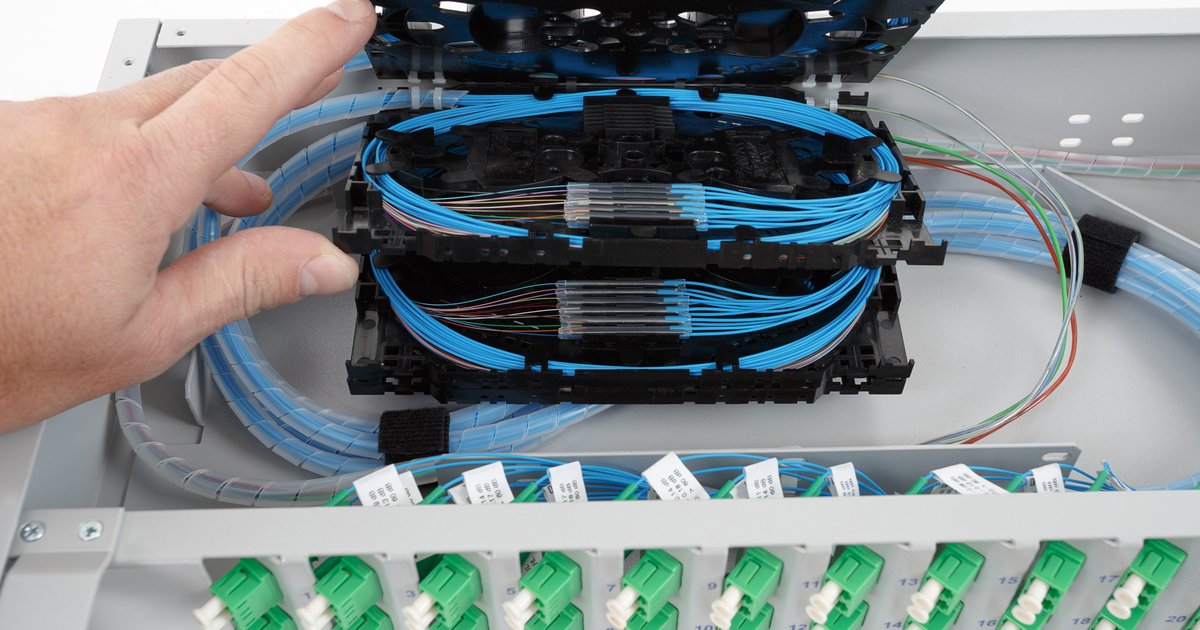
- Structured internal cabling to desks, meeting rooms, and equipment rooms.
- A defined support and maintenance agreement with response times in writing.
This is where working with a specialist matters. CEC TELECOM designs and delivers fibre connectivity for businesses across the region, from single-office FTTO installations to multi-site networks linking Brazzaville, Pointe-Noire, and Kinshasa. We handle the survey, the technical design, the installation, and the ongoing support, so that the business gets a connection it can actually rely on rather than a best-effort line.
Cross-border considerations for DRC businesses
Many companies operating in Congo-Brazzaville also have operations in the DRC, particularly in Kinshasa, which sits directly across the river from Brazzaville. Cross-border connectivity between the two capitals is a practical concern for banks, trading companies, and logistics operators.
Fibre capacity between the two countries exists, but cross-border links require careful engineering to deliver consistent performance. Latency, routing, and redundancy all need to be planned rather than assumed. Businesses should ask prospective providers how cross-border traffic is routed, what the failover arrangements are, and whether service levels apply end-to-end or only within one country. Getting these answers in writing before signing avoids unpleasant surprises later.
Looking ahead
The trajectory is clear: fibre will continue to displace older technologies for business connectivity in Congo-Brazzaville, and FTTO will become the default choice for any organisation that depends on its network. The pace will depend on continued investment in last-mile infrastructure, clearer permitting processes, and a growing pool of trained technicians. For businesses, the lesson is to plan fibre deployments properly now rather than improvise later.
Talk to CEC TELECOM about your fibre project
Whether you are a company in Brazzaville or Pointe-Noire looking to move from an ageing leased line to FTTO, or a business in the DRC that needs reliable cross-border connectivity, CEC TELECOM can help. Our team will assess your site, recommend the right fibre solution for your needs, and manage the deployment from survey to support. Contact CEC TELECOM today to discuss your FTTH or FTTO requirements and get a clear, practical proposal for your business.