The energy challenge remains one of the most persistent obstacles to reliable telecommunications in Central Africa. Across Congo-Brazzaville and the Democratic Republic of Congo, telecom operators and tower companies face a daily struggle: keeping remote base stations powered when the national grid is either absent, unstable, or prohibitively expensive to extend. Diesel generators have long been the default solution, but rising fuel costs, logistical headaches, and environmental pressure are pushing the industry toward a different answer. Solar energy for remote telecom sites is no longer a niche experiment — it has become the backbone of sustainable network expansion in the region.
Why Remote Telecom Sites Struggle with Power
Telecom sites in rural and semi-urban areas of Congo-Brazzaville and the DRC share a common set of problems. The electrical grid, where it exists at all, is often unreliable, with frequent outages and voltage fluctuations that damage sensitive equipment. Extending the grid to a site in the Pool region, in Mai-Ndombe, or along the Congo River corridor can cost tens of thousands of dollars per kilometre — a cost that rarely makes business sense for a single base station.
The traditional fallback has been diesel. But diesel comes with its own burdens:
- Fuel logistics: Transporting diesel to remote sites, especially during the rainy season, is expensive and sometimes impossible.
- Theft and vandalism: Fuel storage attracts theft, and generator components are frequently targeted.
- Recurring costs: Fuel prices in Central Africa are among the highest in the world, and consumption never stops.
- Maintenance: Generators require regular servicing, oil changes, and spare parts that are not always available locally.
- Carbon footprint: Operators increasingly face pressure from investors and regulators to reduce emissions.
The result is a network that is expensive to run and difficult to scale. Solar energy directly addresses each of these pain points.
How Solar Energy Transforms Remote Telecom Sites
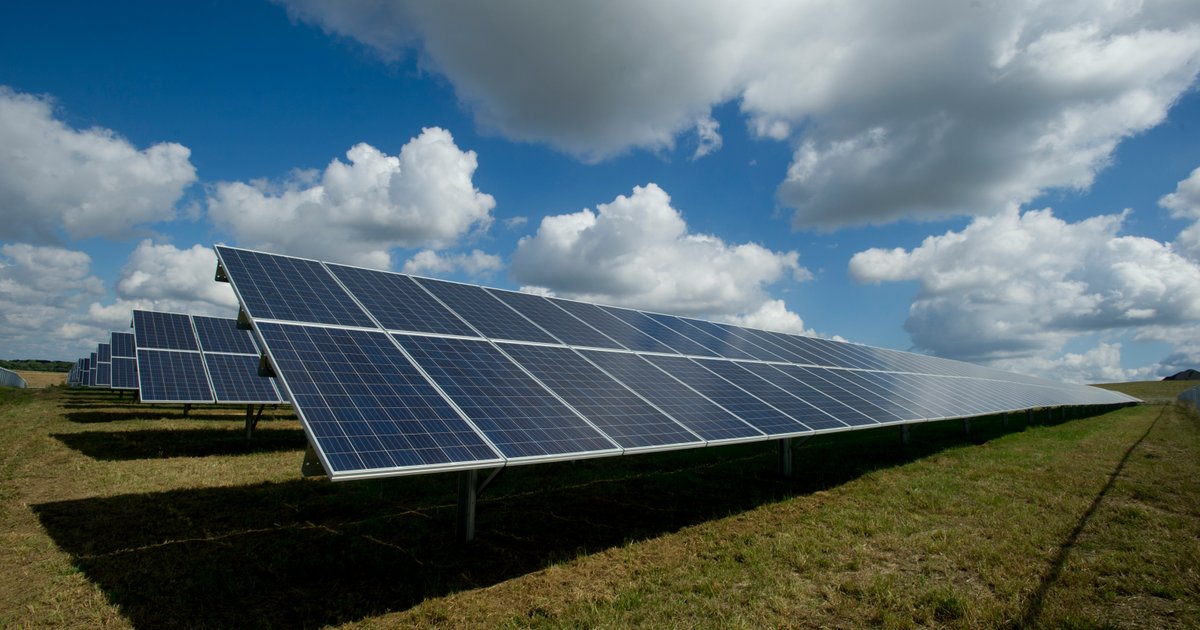
A well-designed solar power system for a telecom site typically combines photovoltaic panels, a battery bank, and an intelligent controller, often with a small backup generator for extended cloudy periods. This hybrid architecture delivers several advantages.
Reduced Operating Costs
Once installed, solar panels generate electricity for free. Operators in the DRC and Congo-Brazzaville report fuel savings of 60 to 90 percent after switching to solar-diesel hybrid systems. For a country where diesel can cost well over a dollar per litre delivered to a remote site, those savings compound rapidly. Payback periods on solar investments in the region often fall between two and four years — after which the energy is essentially free.
Improved Network Availability
Grid outages and fuel shortages translate directly into dropped calls and lost revenue. Solar systems with adequate battery storage keep sites running through the night and across cloudy days. This improves key performance indicators such as site availability and reduces the number of network outages that frustrate subscribers.
Lower Maintenance Burden
Solar panels have no moving parts. They require occasional cleaning and periodic inspection, but nothing compared to the routine of generator servicing. This matters enormously in remote areas where skilled technicians are scarce and travel is difficult.
Environmental and Regulatory Benefits
International operators and their financiers are increasingly committed to reducing carbon emissions. Solar-powered sites support those commitments and can improve access to green financing. In both Congo-Brazzaville and the DRC, where hydropower potential is enormous but grid coverage remains limited, solar represents a practical, deployable form of clean energy.
Designing the Right Solar Solution for Central African Conditions
Not every solar system is built for the realities of the Congo Basin. High humidity, intense heat, heavy rainfall, and dust all take a toll on equipment. A successful deployment requires careful engineering.
Key Design Considerations
- Solar irradiance: Central Africa receives strong, consistent sunlight year-round, but cloud cover during the rainy season must be factored into sizing.
- Battery technology: Lithium-ion batteries are increasingly preferred over lead-acid for their longer lifespan, deeper discharge capability, and tolerance of high temperatures.
- Thermal management: Equipment enclosures must be designed to handle ambient temperatures that regularly exceed 35°C.
- Security: Panels, batteries, and controllers must be protected against theft — a real concern at isolated sites.
- Scalability: Systems should be designed to accommodate future load growth as operators add 4G and eventually 5G equipment.
The Hybrid Advantage
Pure solar systems can be undersized during prolonged cloudy periods. The most reliable approach in Congo-Brazzaville and the DRC is a solar-diesel hybrid, where the generator runs only when battery levels drop below a threshold. This combines the fuel savings of solar with the guaranteed uptime of a generator, and it dramatically reduces generator running hours.
Why Partner with a Local Expert
Solar energy for telecom sites is not a plug-and-play product. It requires site surveys, load analysis, system sizing, procurement, installation, and ongoing monitoring. Importing equipment without local expertise often leads to underperforming systems and disappointed operators.
This is where CEC TELECOM stands apart. As a specialist in telecom infrastructure across Congo-Brazzaville and the DRC, CEC TELECOM understands both the technical and logistical realities of deploying energy solutions in the region. The company supports operators, tower companies, and enterprises with:
- Site assessment and energy audits
- Design and sizing of solar and hybrid power systems
- Supply of panels, batteries, controllers, and enclosures suited to tropical conditions
- Installation and commissioning by experienced field teams
- Maintenance contracts and remote monitoring
- Rapid response when sites need attention
Working with a partner that knows the terrain — literally and figuratively — reduces risk and accelerates deployment. CEC TELECOM's teams are accustomed to operating in challenging environments, from urban Kinshasa and Brazzaville to isolated rural sites where access itself is a project.
The Business Case in Numbers
Consider a typical remote macro site in the DRC running on diesel alone. Fuel consumption might reach 1,500 to 2,500 litres per month, depending on load and generator efficiency. At delivered fuel prices that can exceed $1.20 per litre, that is a monthly bill of $1,800 to $3,000 — before maintenance, theft losses, and logistics. Over five years, the cost can exceed $150,000.
A solar-hybrid system sized for the same site might cost $40,000 to $70,000 installed, depending on battery capacity and site conditions. Fuel consumption drops by 70 to 90 percent, maintenance falls sharply, and the system typically pays for itself within three years. Beyond that, the savings flow directly to the operator's bottom line.
Conclusion: Solar Is the Future of Remote Telecom Power
The economics, the logistics, and the environmental imperative all point in the same direction. Solar energy for remote telecom sites is no longer a question of whether to adopt it, but how quickly it can be deployed. For operators in Congo-Brazzaville and the DRC, solar-hybrid power offers a path to lower costs, higher availability, and more sustainable network growth.
The key is to work with a partner who understands the local context and can deliver end-to-end solutions. CEC TELECOM has the expertise, the field experience, and the regional presence to make your solar transition a success.
Ready to cut your energy costs and keep your sites online? Contact CEC TELECOM today to discuss a solar or hybrid power solution tailored to your telecom infrastructure in Congo-Brazzaville and the DRC. Our team is available to answer your questions and schedule a site assessment.